

Born in Sieradz in central Poland in 1928, Arek was the fourth of five children, with one brother and three sisters. His family were Orthodox Jews.
At the age of ten, he was sent by the Germans to Otoschno labour camp, where he was forced to work on the Warsaw-to-Berlin railway for the next two years. Of the 2,500 Jews in the labour camp, only 11 survived.
When Arek was 12, he was reunited with his family in Sieradz, but after just two weeks, he was transported to the Lodz ghetto. He never saw the rest of his family again.
He found himself in an orphanage in Lodz and was given a job in the textile mill.
In June 1944 the Germans started to liquidate the ghetto and soon orders came through for the orphanage to be closed. All the children were to be “resettled”. On 25 August, about 185 of them assembled outside the orphanage. They were put onto a truck, taken to a small railway station and transported in cattle wagons to Birkenau-Auschwitz.
On arrival, when the selection took place, Arek realised that the Nazis were separating people into two rows, to the left and right. Although ordered to go to the left, he managed to cross to the right when the guards’ attention was distracted. Arek had just saved himself from certain death in the gas chambers. Of the 185 orphans, only Arek and two others survived the day.
In January 1945 Arek was among the thousands of men and women from Auschwitz forced onto a death march towards Germany. They marched for days until they eventually reached the large town of Katowice, where they were put into goods wagons. The journey in those wagons, destination unknown, lasted for several days without food.
They eventually arrived at their destination: Buchenwald concentration camp in Germany. Arek managed to survive in the most appalling conditions until, in April 1945, the Germans decided to evacuate the camp. The 4,500 inmates were on the march again towards the city of Weimar, where they were loaded onto open wagons.
After three and a half weeks on the train, mostly without food, they arrived in Czechoslovakia. On 4 May 1945, 600 of the original 4,500 men from Buchenwald arrived at Roundnice. The train was finally taken to the Theresienstadt ghetto, where, four days later, on 8 May, they were liberated by the Russian army. Arek had survived, but virtually all his family had been murdered. His only surviving relative was Mania, his eldest sister, whom he found in Ulm, Germany, in 1947.
After liberation, Arek was transported to England with 300 other children. They were given just 8 hours of English lessons and had to learn the rest for themselves.
Today, Arek lives in Leeds, England. He is married and has three daughters and seven grandchildren.
His years since the Holocaust have been quiet and happy. He has lived, worked and appreciated every moment of the life he now enjoys. For this reason, now that he has retired, he spends much of his time working with young people, sharing his story and reflecting with them on its meaning, past, present and future.
I loved this book. Even though it doesn't seem to be professionally written, it engaged me from beginning to end. This is the story of one man's experience with "the final solution" of Hitler's concentration camps. Mr. Hersh writes with enough detail that I can hear, see, smell and otherwise get a good sense of what he went through. I would recommend this book to anyone for its inspiration as well as its personal chronicle of this important event that must not be forgotten
A harrowing story of a young boy’s survival through 5 concentration camps during the Holocaust. He was 11 when hauled off by the Nazis and 16 when the war was over. It is a miracle he survived. The stories he tells of deprivation, hunger, shootings, beatings, being locked in rail cars for two months, the split second decisions that saved him for another day - these all make for horrifying, true, sad reading for anyone interested in the Holocaust. One example of his survival ... his entire family was rounded up and taken to a local church. He was thirsty and told his mother he was going to run outside to maybe get some water. While he was outside, the Nazis killed every single person in the church. His father, mother, brother, sisters.
The book was very descriptive and moving, adding more to my cache of info regarding the Holocaust. I will never be able to fathom how anyone survived the horrors and abuse they endured that was relentlessly dealt to them by the violent, murderous, barbaric, merciless, quasi-human beings that Hitler and his cohorts created and used in his attempt to eradicate Jews and others from Europe. There was one incident described by the author that was so horrible that I had to stop reading and re-center myself: An absolute brute of a beast killing a prisoner - another human being - by chopping him up alive with a shovel. I've read many, many books about the Holocaust, but this one act of brutality was an unbelievable kick in my gut. What kind of demented mind could allow a human being to do this to another? A Nazi… Upon being freed, the author and his fellow prisoners showed what decency and humanity truly is: They refused to harm their now-prisoner captors. Because they were human beings...
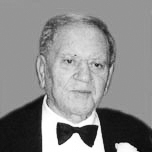
Arek now shares his testimony and does everything he can to counter assertions that the Holocaust was just a ‘detail of history’.